Continuity
Multi-path communications
Fiber or business-grade wired service remains the primary connection, with Starlink and 5G/LTE as resilience paths for critical operations.
 Visual brief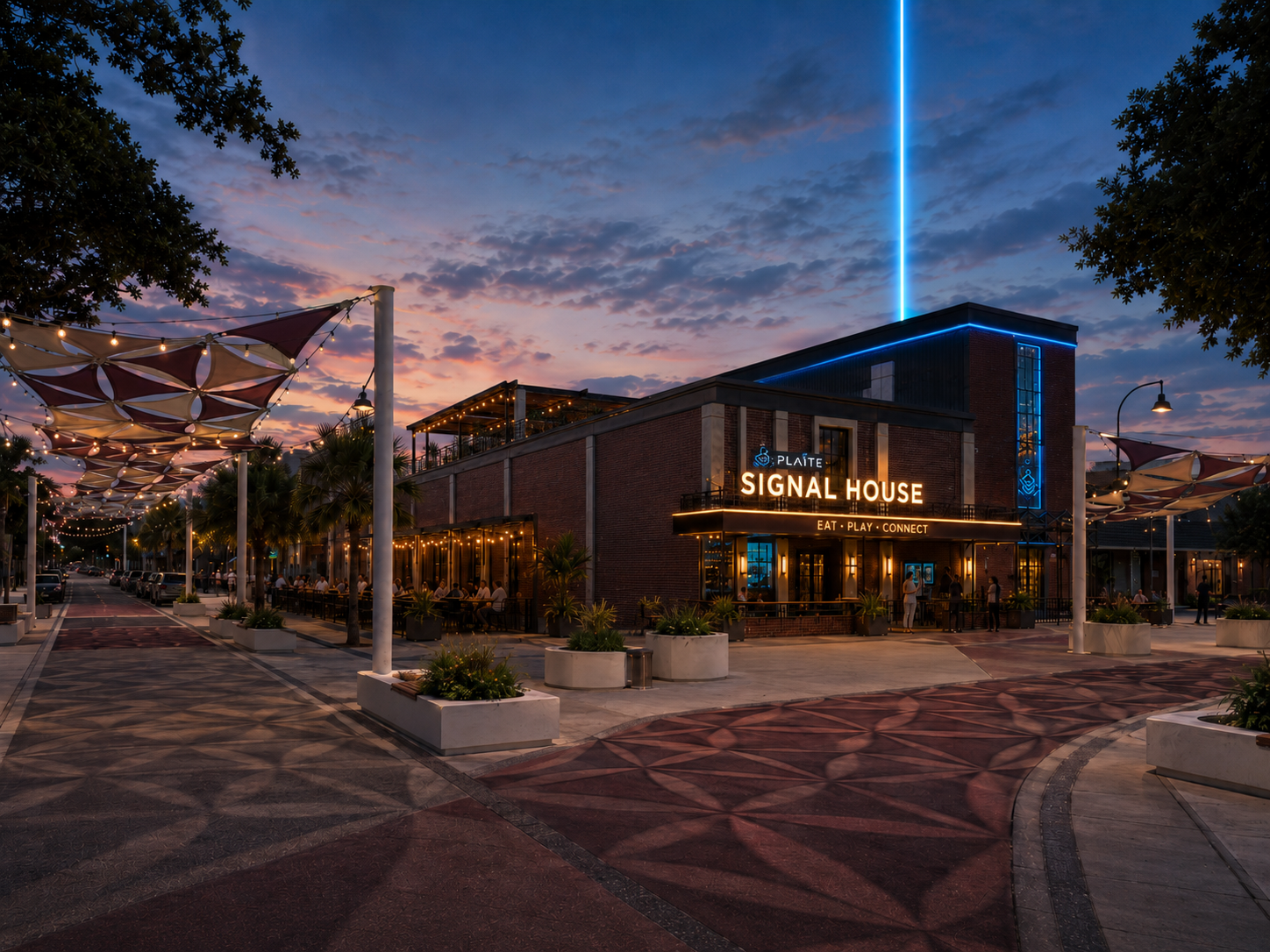
PLAiTE Power is the partner-facing infrastructure story behind Signal House: energy continuity, backup communications, critical-load battery capacity, robot-ready pathways, solar-ready architecture, and a future parking structure that can do more than store cars.
Pilot site
Signal House
A visible adaptive-reuse anchor for downtown resilience.
Coalition lane
Grid Builders
A repeatable partner model for civic-scale private infrastructure.
Partner ask
Feasibility
Energy, construction, parking, data, and finance review.
Layered infrastructure
The page gives partners a controlled way to understand the larger vision: private companies helping communities carry backup capacity, without claiming emergency authority or making approvals sound automatic.
Continuity
Fiber or business-grade wired service remains the primary connection, with Starlink and 5G/LTE as resilience paths for critical operations.
Critical loads
A critical-load panel can keep network, POS, security, emergency lighting, operations systems, and selected refrigeration online when the building needs continuity.
Generation
Solar can be treated as architecture: rooftop zones, shade canopies, parking structures, and public-facing infrastructure that looks intentional.
Automation
Signal House can reserve secure racks, charging/service zones, data pathways, monitoring, and controls so future robotics or automation partners have somewhere practical to plug in.
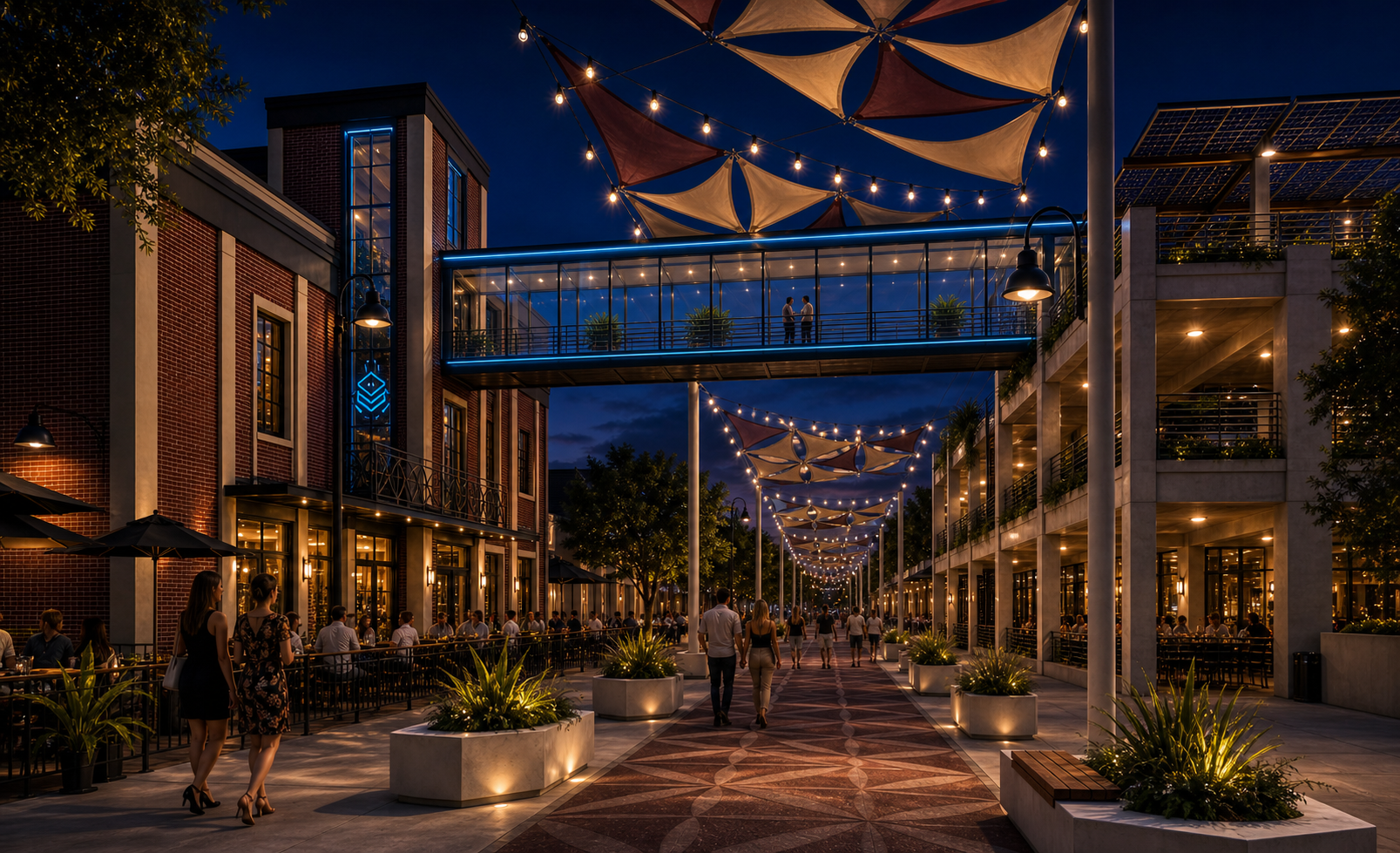
Proposal add-on
The future deck can be more than parking: canopy shade, solar language, battery reserve capacity, data, robotics-ready service pathways, communications routing, and a weather-protected arrival path into the Signal House upper level.
A lightweight parking structure across from Signal House could carry a larger canopy language inspired by the Railroad Project, with an open-air upper level, built-in battery/storage capacity, and a skyway into the third-floor tower level.
This is not base scope. It is a public-private partnership exploration item subject to City direction, right-of-way and air-rights approval, engineering, ADA, fire/life-safety, financing, ownership, operations, and maintenance terms.
Grid Builders Coalition is the larger partnership vision behind PLAiTE Power: builders, energy partners, connectivity providers, technology companies, local governments, investors, and operators working together to help communities keep pace with the next generation of infrastructure.
As AI, automation, robotics, battery storage, satellite internet, and edge computing accelerate, smaller cities cannot rely on one massive upgrade to solve everything. The practical answer is a repeatable pattern of local nodes: buildings, parking structures, rooftops, civic venues, and mixed-use corridors designed with power, communications, software, mobility, and future automation in mind from the beginning.
Signal House is the first pilot node: a downtown adaptive-reuse project that can combine hospitality, software operations, battery-backed critical systems, backup communications, solar-ready design, robot-ready pathways, and public-private partnership potential.
Builders create the physical platform: adaptive reuse, parking structures, rooftops, corridors, and future-ready service spines.
Energy and connectivity partners help keep local nodes online through batteries, solar readiness, satellite backup, secure networks, and monitoring.
Technology partners supply the operating layer: software, sensors, dashboards, automation readiness, robotics paths, and public-facing intelligence.
Local governments guide civic fit while private partners help communities modernize without waiting for one giant system to arrive.
Battery-backed critical loads, solar-ready canopies, EV paths, lighting, and utility rooms that can grow as storage technology improves.
Fiber, Starlink or satellite backup, 5G/LTE failover, secure racks, cybersecurity, public alerts, and continuity during outages.
Service corridors, sensor coverage, clean access routes, charging/service zones, and future automation pathways built into the shell.
PLAiTE-style dashboards that connect energy, operations, events, wayfinding, partner nodes, and future AI resource monitoring.
Operating posture
The goal is not to replace government or become a utility. It is to strengthen existing systems, modernize community infrastructure, and make sure smaller cities, local businesses, veterans, workers, and residents are not left waiting while technology accelerates around them.
Partner lanes
Energy services, construction, storage, connectivity, robotics, financing, and venue software can all participate without needing to own the whole vision. That keeps the pitch legible and makes letters of interest easier.
Commercial resilience, backup power, critical-load design, infrastructure-as-a-service, UPS, and electrical continuity support.
Lightweight parking-deck systems, low skyline structures, canopy integration, structural review, and phased delivery.
Battery systems, inverters, switchgear, solar canopies, critical panels, monitoring, fire review, and utility coordination.
Fiber, Starlink, 5G/LTE failover, secure racks, network controls, cybersecurity, robotics readiness, and service continuity.
Signal House pilot
The proposal can layer this in stages: start with critical load continuity and communications backup, then study solar, parking, battery, and skyway options as partners and approvals come into focus.
Phase
Use the Signal House proposal to introduce a realistic critical-load, backup-communications, and solar-ready strategy.
Phase
Bring energy, construction, solar, communications, and financing partners into scoped review without requiring final commitment up front.
Phase
Study a low skyline parking structure with integrated canopy, battery/storage capacity, and a future skyway into Signal House upper levels.
Phase
Package the model as Grid Builders Coalition: a pattern for adaptive reuse, civic hospitality, energy resilience, robotics readiness, and private-sector continuity.
PLAiTE Power does not replace the core RFP proposal. It gives the right partners a clear door into the resilience layer: what the first site needs, where their lane fits, and how a local building can become a repeatable civic infrastructure pattern.